
Dental disease is the most common medical condition we see, and the most consistently underestimated. By the age of three, the majority of dogs and cats already have some degree of periodontal disease — and because it develops below the gumline, a mouth can look perfectly acceptable from the outside while a painful infection sits underneath.
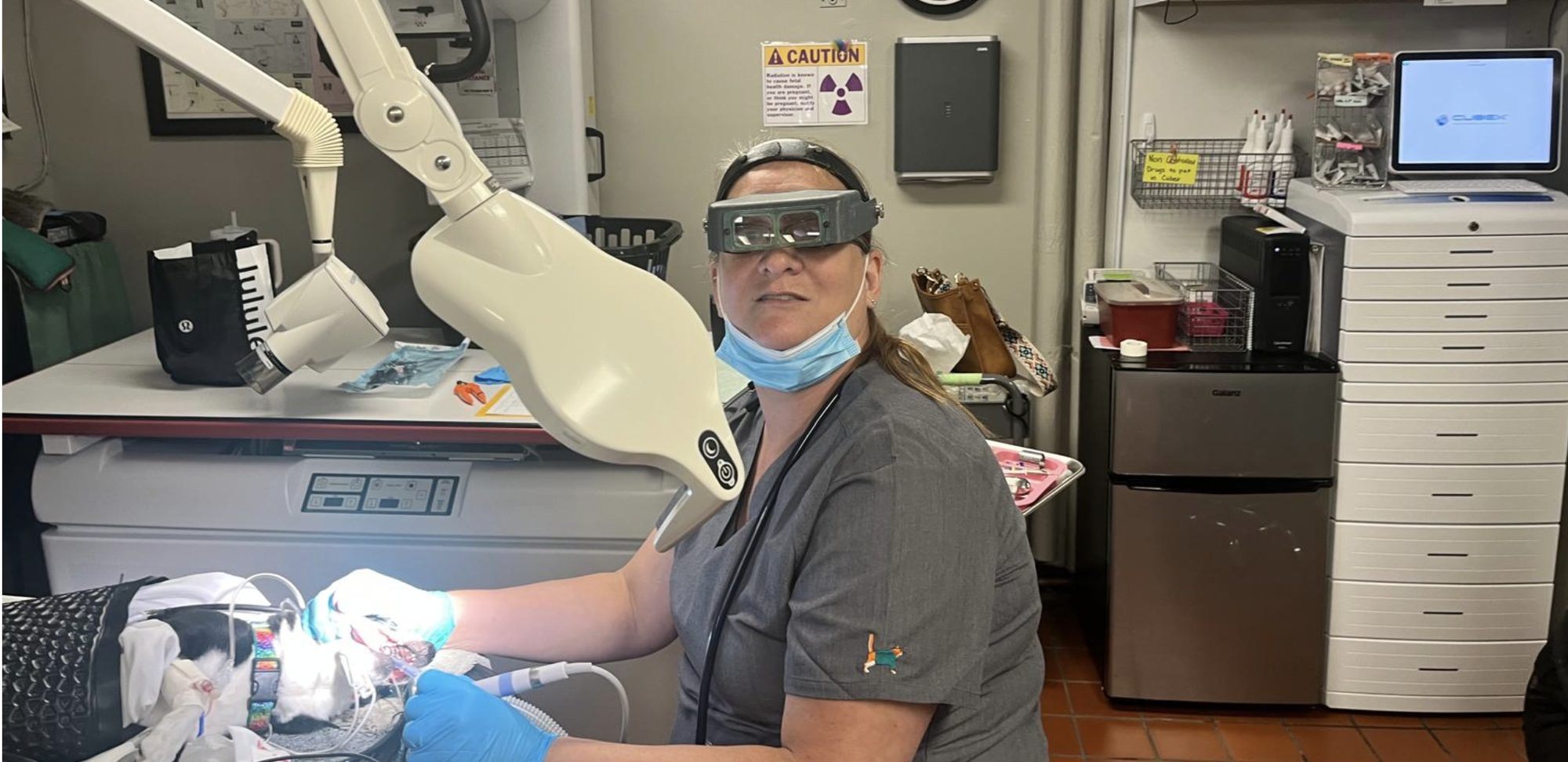
Why we insist on radiographs
Roughly two-thirds of every tooth is beneath the gumline, and that is exactly where periodontal disease does its damage. Cleaning what you can see, without imaging what you cannot, means missing root abscesses, bone loss, fractured roots, and — in cats — resorptive lesions, which are both common and genuinely painful.
Full-mouth dental radiographs are what turn a cleaning into a diagnosis. They are the difference between polishing a mouth and actually treating it.
- Professional dental cleanings under anesthesia
- Digital dental radiographs for complete assessment
- Extractions and oral surgery
- Oral health assessments during wellness visits
- At-home dental care guidance
Why anesthesia is not optional
A thorough dental cleaning means probing every tooth, cleaning below the gumline, and taking radiographs — none of which can be done properly, or humanely, on an awake animal. Anesthesia also protects the airway from bacteria and water during the procedure.
You may have seen "anesthesia-free dental cleaning" offered elsewhere. It scrapes visible tartar from the crown and leaves the disease beneath the gumline entirely untouched. The AVMA and the American Veterinary Dental College both advise against it. The mouth looks better afterwards; nothing has been treated. We would rather tell you that plainly than sell you the easier-sounding option.
What dental pain actually looks like
Very few pets stop eating because of dental pain — they adapt, chew on the other side, and swallow food whole. Owners routinely tell us their pet was fine, and then describe a different animal two weeks after treatment: brighter, more playful, more affectionate.
The signs worth noticing are subtler: bad breath, dropping food, chewing on one side, pawing at the face, reluctance to have the head touched, or simply becoming a quieter animal over a year or two.
What genuinely helps at home
Daily toothbrushing is the single most effective thing you can do, and it is worth persevering with even if you only manage a few days a week. Dental diets, water additives, and chews vary enormously in whether they do anything at all.
The Veterinary Oral Health Council maintains a list of products with real evidence behind them — a useful filter, given how much of the dental aisle is marketing. We are happy to tell you which products are worth your money and which are not.
More photos
Common questions
Why does my pet need anesthesia for a dental cleaning?
A complete dental cleaning requires probing each tooth, cleaning below the gumline where periodontal disease occurs, and taking full-mouth radiographs. None of this can be performed thoroughly or humanely on an awake animal, and anesthesia also protects the airway from bacteria and water during the procedure.
Is anesthesia-free dental cleaning a good option?
No. Anesthesia-free cleaning removes visible tartar from the crown of the tooth while leaving disease below the gumline untreated, and it does not allow for dental radiographs. Both the AVMA and the American Veterinary Dental College advise against it. The mouth appears cleaner without the underlying disease having been addressed.
How often do pets need dental cleanings?
It varies widely. Some pets need annual cleanings, while others go several years between them. Small breeds, brachycephalic breeds, and cats tend to need more frequent care. We assess the mouth at every wellness visit and recommend a cleaning when there is disease to treat, not on a fixed schedule.
How do I know if my pet has dental pain?
Most pets continue eating despite significant dental pain. Look instead for bad breath, dropping food, chewing on one side, pawing at the face, reluctance to have the head handled, or a gradual decline in playfulness. Many owners only recognize the pain in hindsight, after treatment, when their pet becomes noticeably brighter.
Do dental chews and water additives work?
Some do and many do not. The Veterinary Oral Health Council awards its seal to products with demonstrated evidence of reducing plaque or tartar, which makes its accepted-products list a reliable filter. Daily toothbrushing remains considerably more effective than any chew or additive.
References & further reading
The guidance on this page follows current veterinary consensus. These are the sources behind it, if you would like to read further.