
Watching your pet feel unwell and not knowing where to turn is one of the harder parts of owning one. A sick visit is any appointment outside routine wellness care — and if something feels off to you, even if you cannot name it, that instinct is usually worth acting on.
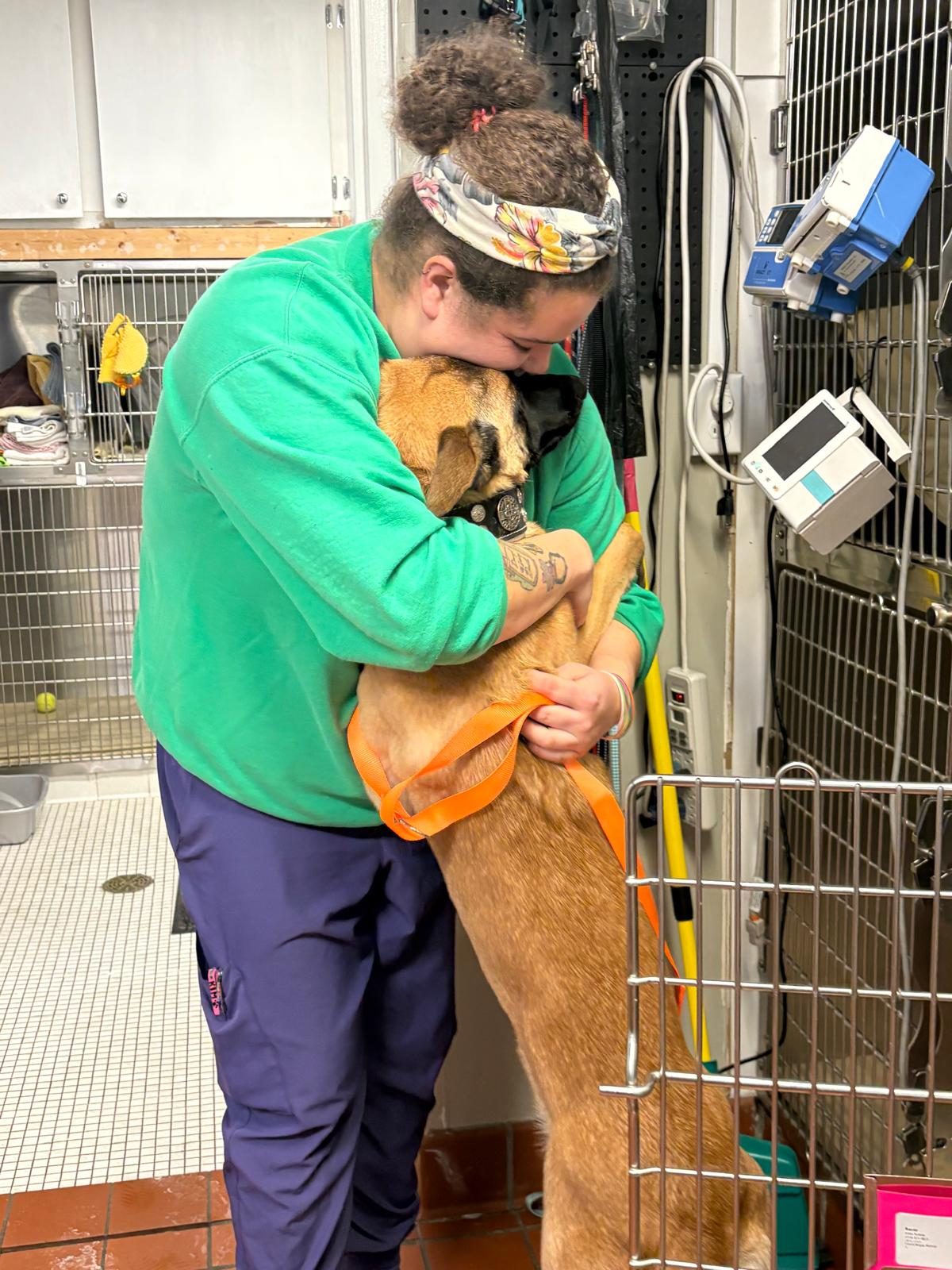
What counts as a sick visit
Sudden behavior changes, unexplained weight loss, persistent vomiting or diarrhea, difficulty breathing, visible pain, or an injury that needs attention. It also covers follow-up on ongoing conditions, post-surgical monitoring, and cases where hospitalization becomes necessary to stabilize a pet who cannot be safely managed at home.
Plenty of things that start mild escalate quickly. A dog who has not eaten for a day or two, a cat hiding more than usual, a pet unsteady on their feet — all of those earn a closer look. We would far rather see something early and find nothing.
What a proper sick visit gives you
Guessing wastes time and occasionally makes things worse. We use targeted diagnostics — bloodwork, urinalysis, imaging, and a careful physical exam — to find the actual cause rather than treating the surface. Because the laboratory and imaging are in-house, that usually happens during the same visit.
Pain assessment is part of it, not an afterthought. Pets are instinctively good at concealing discomfort, so it is routinely more significant than it looks, and treating it properly speeds recovery rather than merely making an animal more comfortable.
And you get told what is going on. What is wrong, what the treatment involves, what to realistically expect — in plain language, with clarity, honesty, and a plan.
Hospitalization and overnight supervision
Some illnesses have a narrow window where continuous care genuinely changes the outcome. Fluids, medication, and monitoring working together over hours cannot be replicated at home, and hospitalization with overnight supervision keeps a patient stable through that period.
We will be honest with you about whether your pet needs it. If they can be managed at home safely, that is usually better for them and cheaper for you, and we will say so.
Common questions
When should I bring my pet in rather than wait and see?
Difficulty breathing, collapse, repeated vomiting, refusal to eat for more than a day, visible pain, or any sudden change in behavior all warrant being seen. If your instinct says something is wrong, that is generally worth acting on — owners notice changes long before they become obvious findings on an examination.
Will my pet need to stay overnight?
Only if continuous care will genuinely change the outcome. Hospitalization allows fluids, medication and monitoring to work together through a critical window in a way that is not possible at home. Where a pet can be safely managed at home instead, we will tell you — it is usually better for them and less expensive for you.
How quickly will we know what is wrong?
Often within the same visit. Blood counts, chemistry panels, urinalysis, radiographs and ultrasound are all performed in-house, so in many cases we move from examination to diagnosis to plan while you are still here rather than calling you in a few days.
My pet seems fine but is not eating. Is that urgent?
It is worth a call. Appetite loss is one of the earliest and least specific signs of illness in both dogs and cats, and in cats more than two days without eating carries its own risk to the liver. It is a symptom that deserves investigating rather than waiting out.
References & further reading
The guidance on this page follows current veterinary consensus. These are the sources behind it, if you would like to read further.
- Pet owner resources — AVMA
- Emergency and critical care — Merck Veterinary Manual