Water does something no medication can: it takes the weight off a painful joint while still asking the muscle around it to work. Our water treadmill in Williamsville, New York is used for post-surgical rehabilitation, joint and arthritis therapy, weight management, and neurological recovery — and for a dog rebuilding after surgery, that combination is the difference between resting and actually recovering.
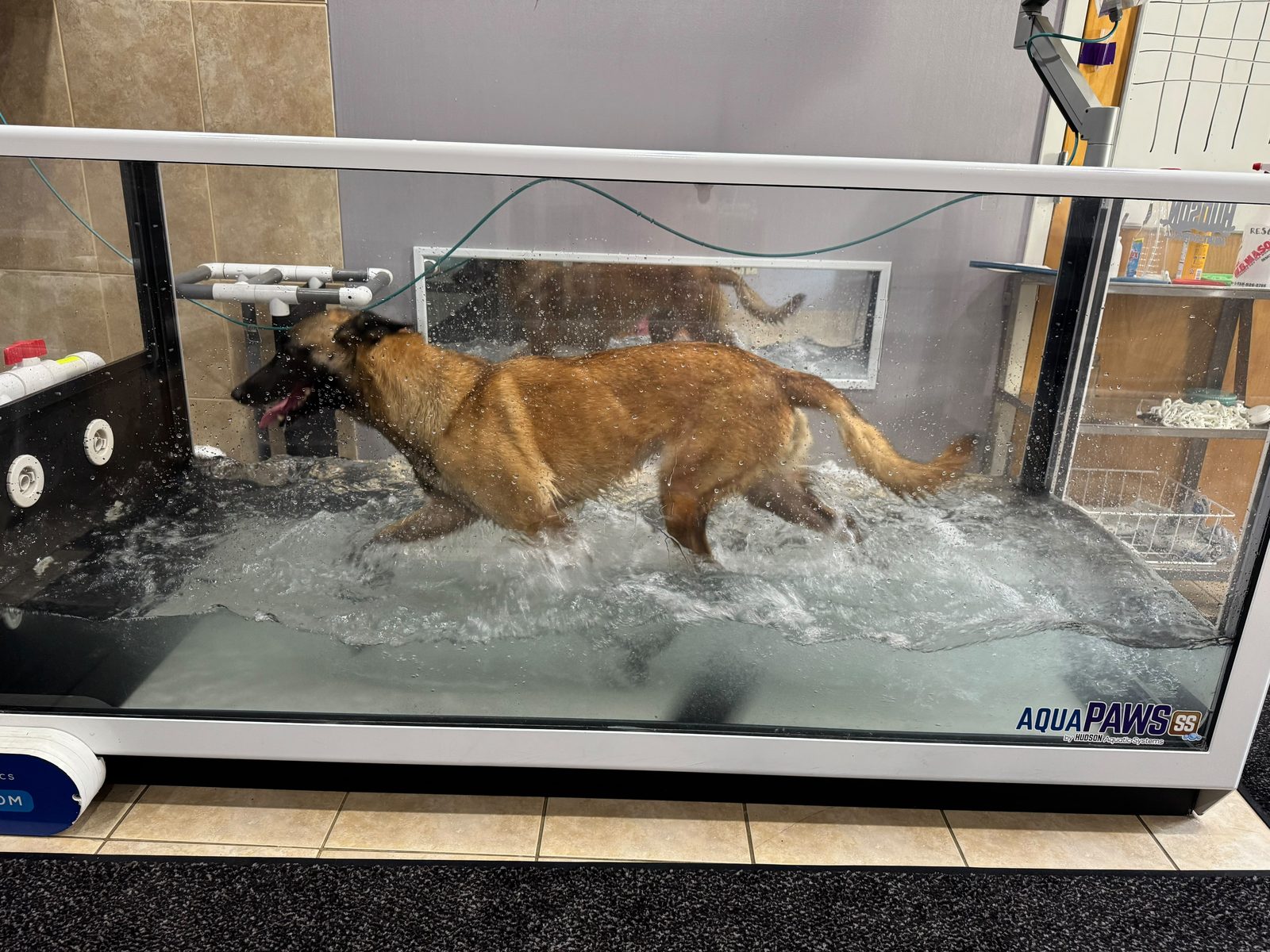
How the underwater treadmill works
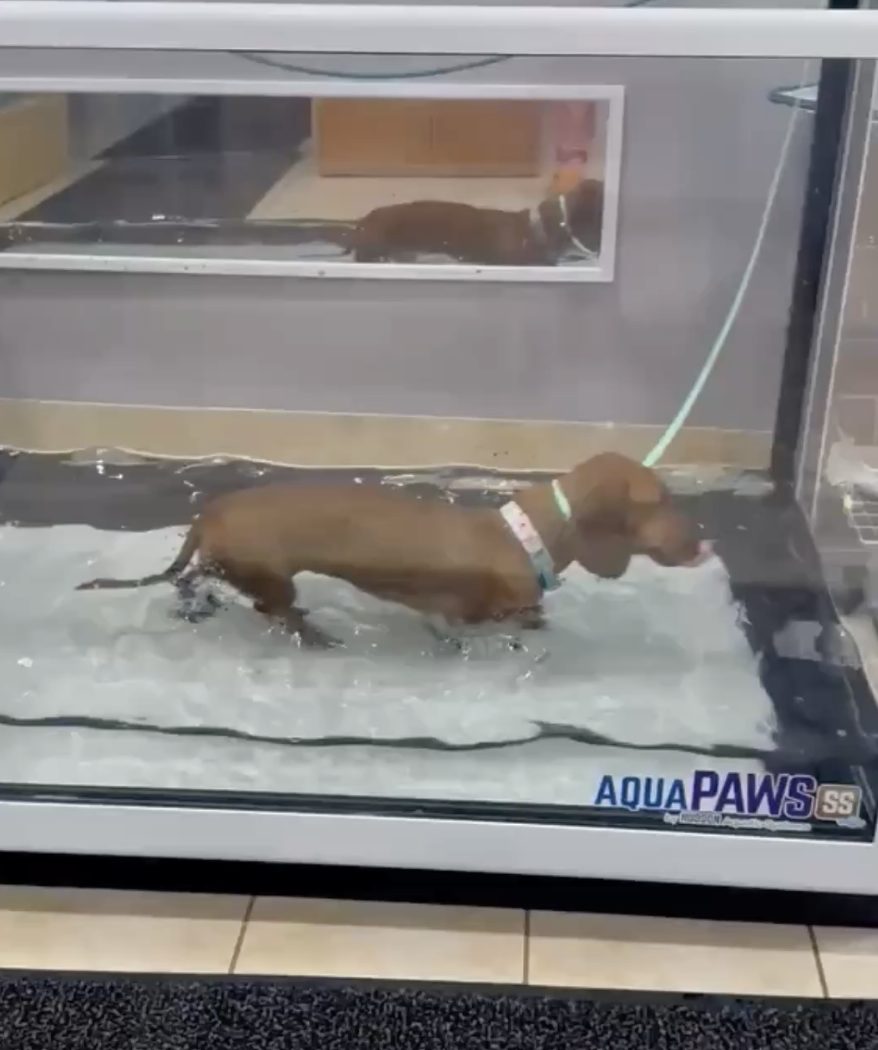
Your dog walks on a treadmill inside a chamber that fills with warm water. Buoyancy carries much of their body weight, so a joint that hurts under full load can move comfortably, while the water’s resistance makes every step harder work than the same step on land. The warmth helps stiff tissue relax before the work begins.
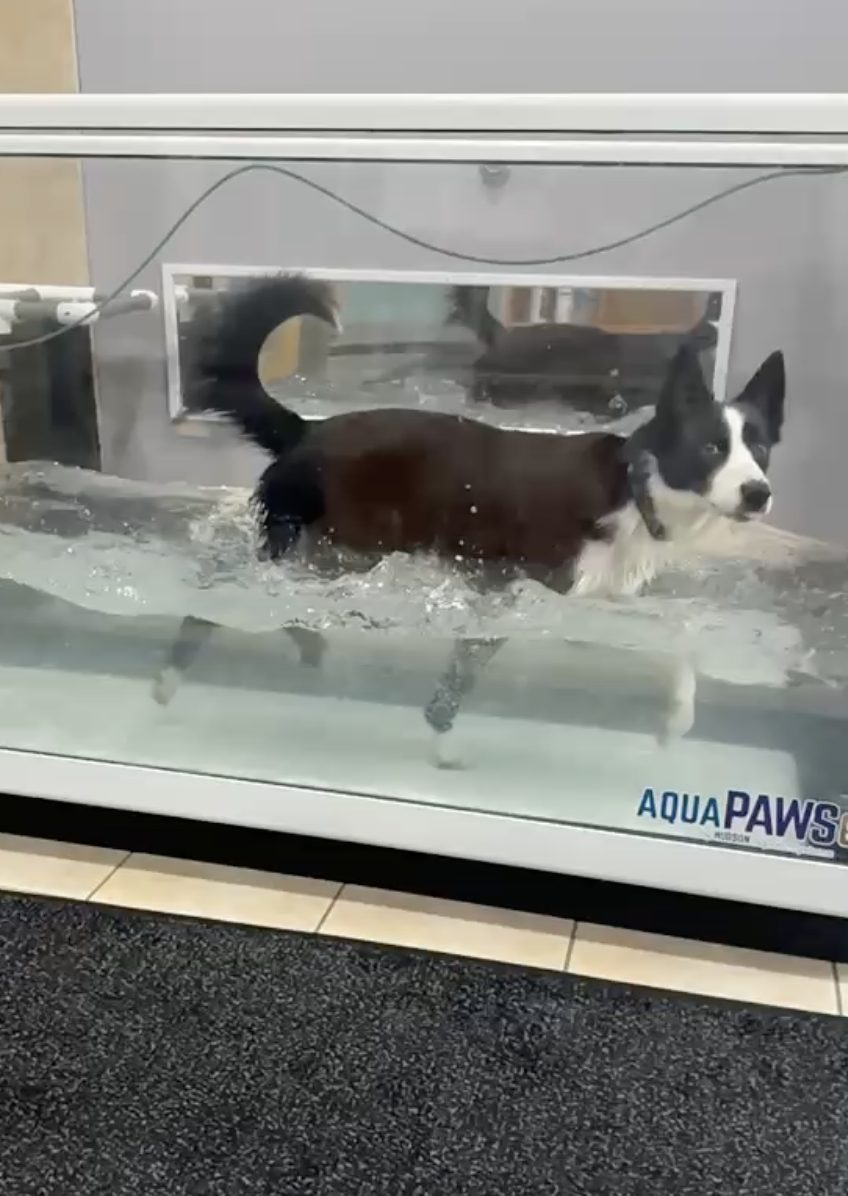
Water depth is the control dial, and it is more precise than most people expect. At roughly shoulder height a dog carries only a fraction of their body weight — enough support that an arthritic or post-operative limb will bear weight willingly, while the muscle around it still has to work. Lower the water and the load increases; that is how a program progresses over weeks.
Because depth, speed, and duration are all adjustable, this is controlled, measurable exercise. That is precisely what a healing joint needs and what a walk around the block cannot provide.
- Underwater water treadmill therapy
- Therapeutic swimming sessions
- Post-surgical rehabilitation programs
- Joint therapy and arthritis management
- Weight management exercise plans
- Neurological and mobility rehabilitation
- Conditioning for sporting and working dogs
Post-surgical rehabilitation
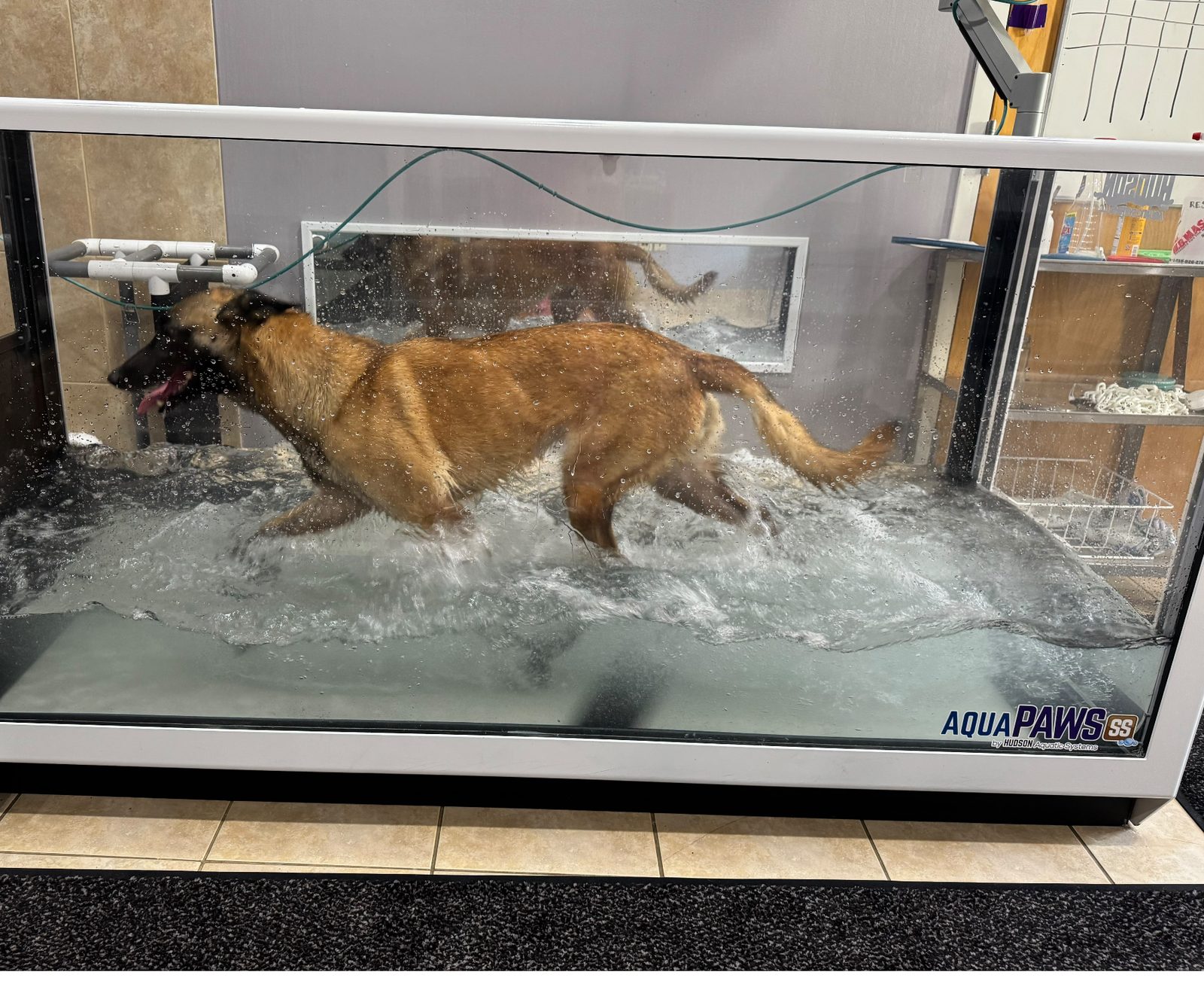
This is the most common reason dogs come to us. After cruciate surgery, fracture repair, or a spinal procedure, muscle is lost quickly — and it is far slower to rebuild than it was to lose. A dog who is crated for six weeks protects the repair and wastes the leg at the same time.
Hydrotherapy resolves that conflict. It lets a dog use the limb, under support, before they could safely do so on land, which speeds the return to function and improves the strength they finish with. Starting at the right moment, on the surgeon’s timeline, changes the ceiling of what a dog gets back.
Joint therapy for arthritis
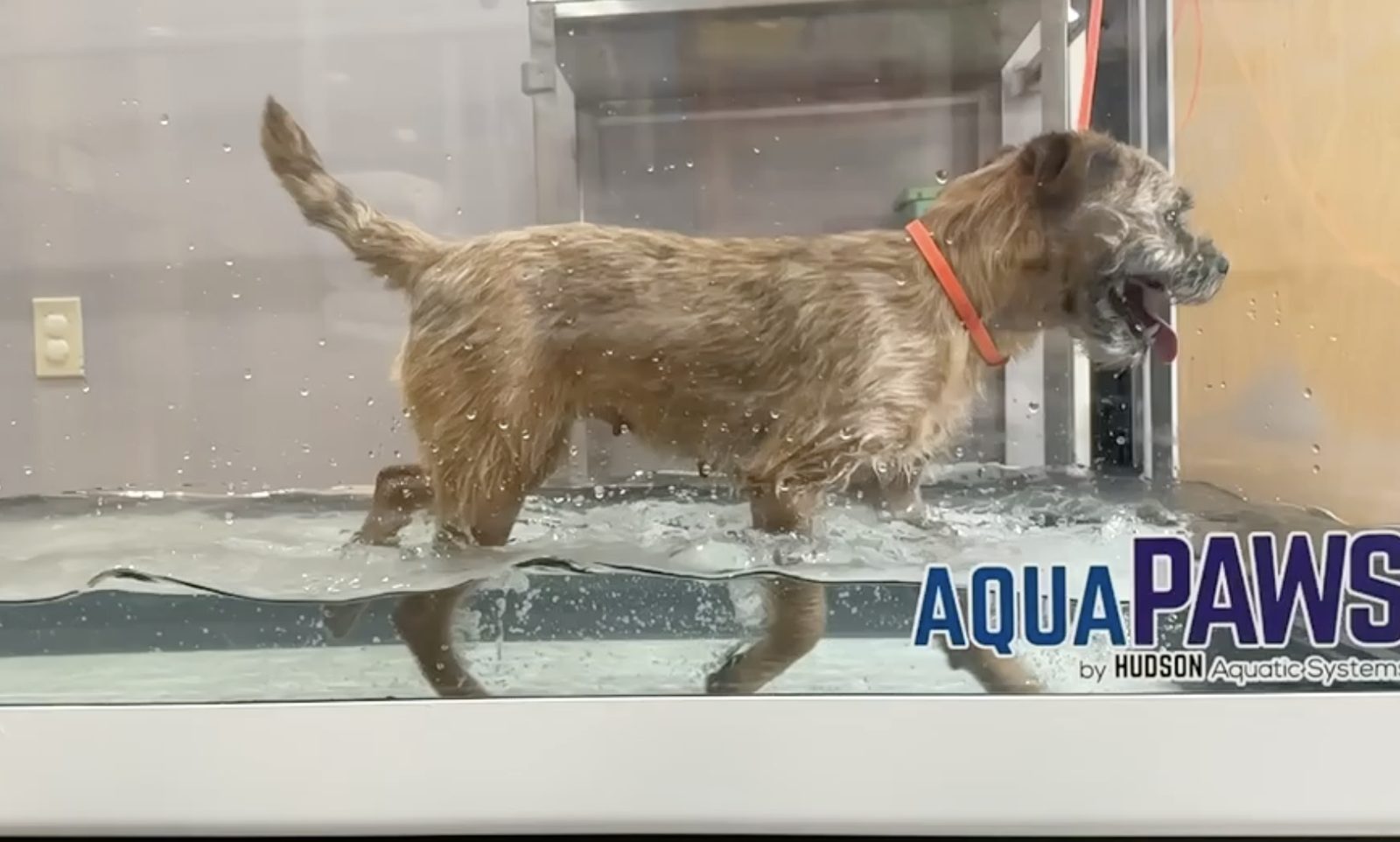
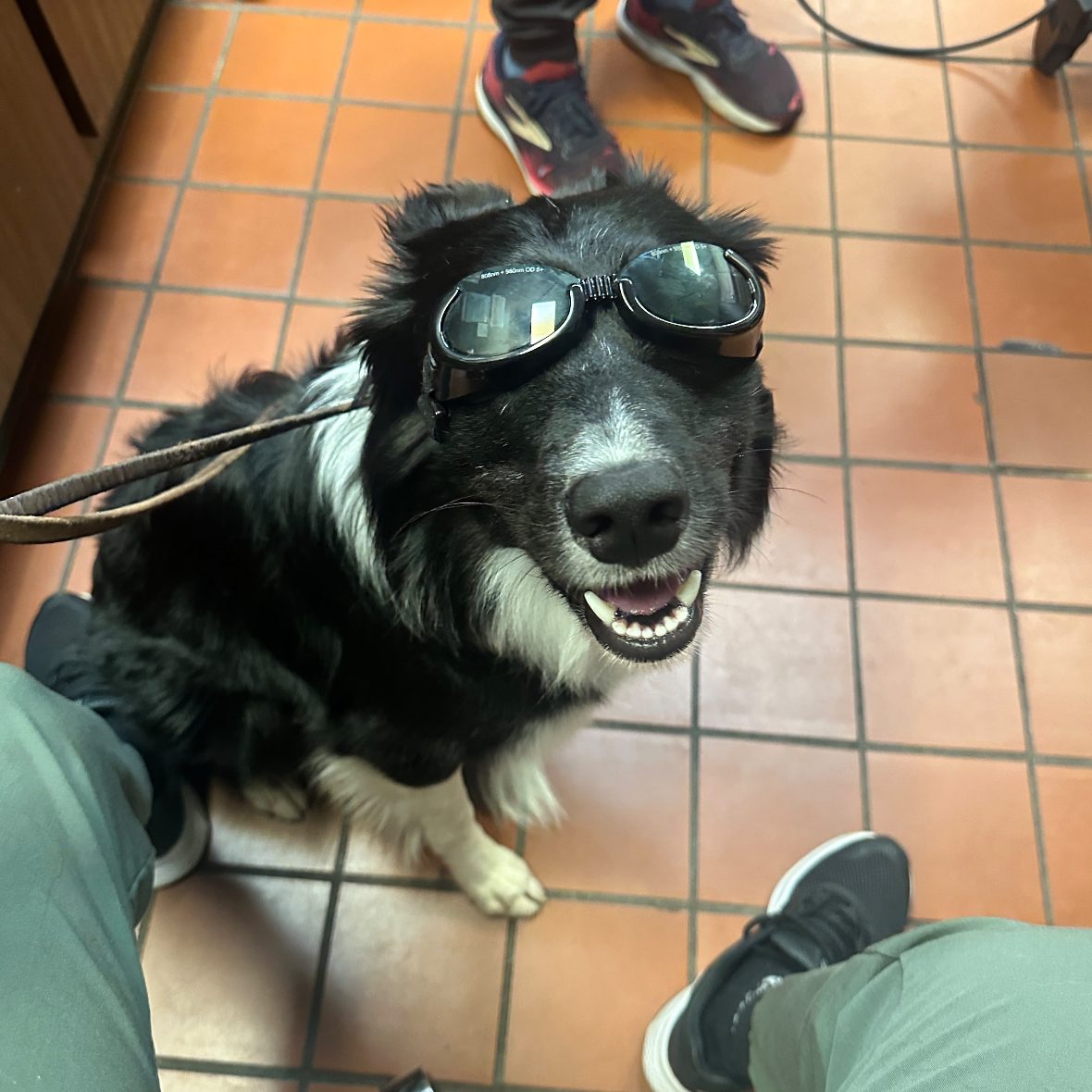
Osteoarthritis is one of the most common conditions in older dogs and among the most under-treated, largely because owners read the signs as ordinary ageing. A dog who has stopped meeting you at the door, hesitates at the stairs, or no longer gets on the sofa is usually telling you a joint hurts.
The evidence for water treadmill work in arthritic dogs is genuinely encouraging. A study of dogs with hip osteoarthritis following an eight-week underwater treadmill program found significant improvement in lameness scores and muscle mass compared with dogs managed on anti-inflammatories alone. Maintaining the muscle around an arthritic joint is one of the most effective things available, and for many dogs it means less reliance on medication rather than more.
Weight management that does not punish the joints
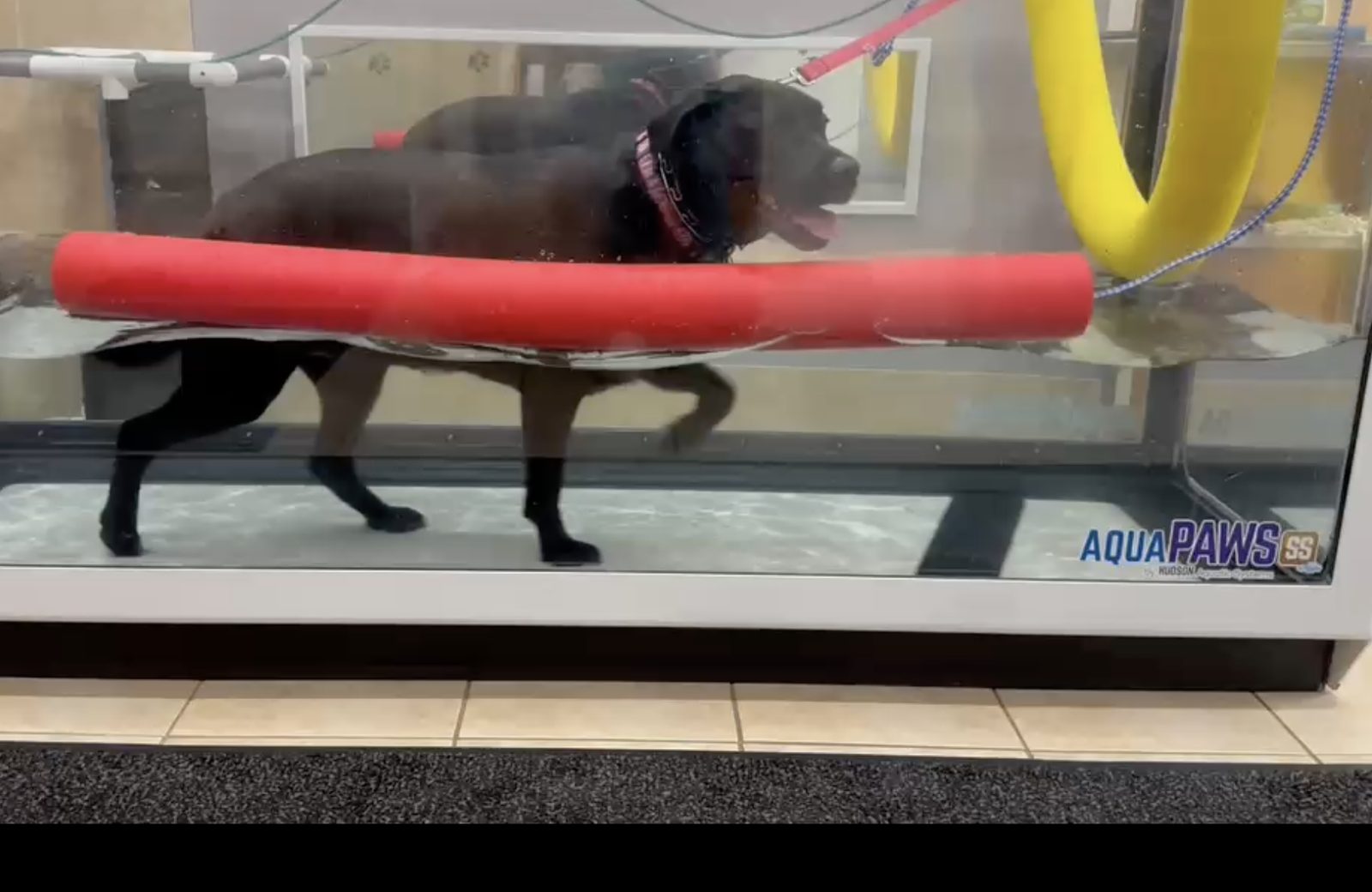
Overweight dogs are caught in a loop: the weight hurts the joints, the sore joints discourage exercise, and the lack of exercise adds weight. Asking an obese, arthritic dog to walk further on pavement usually makes things worse before it makes them better.
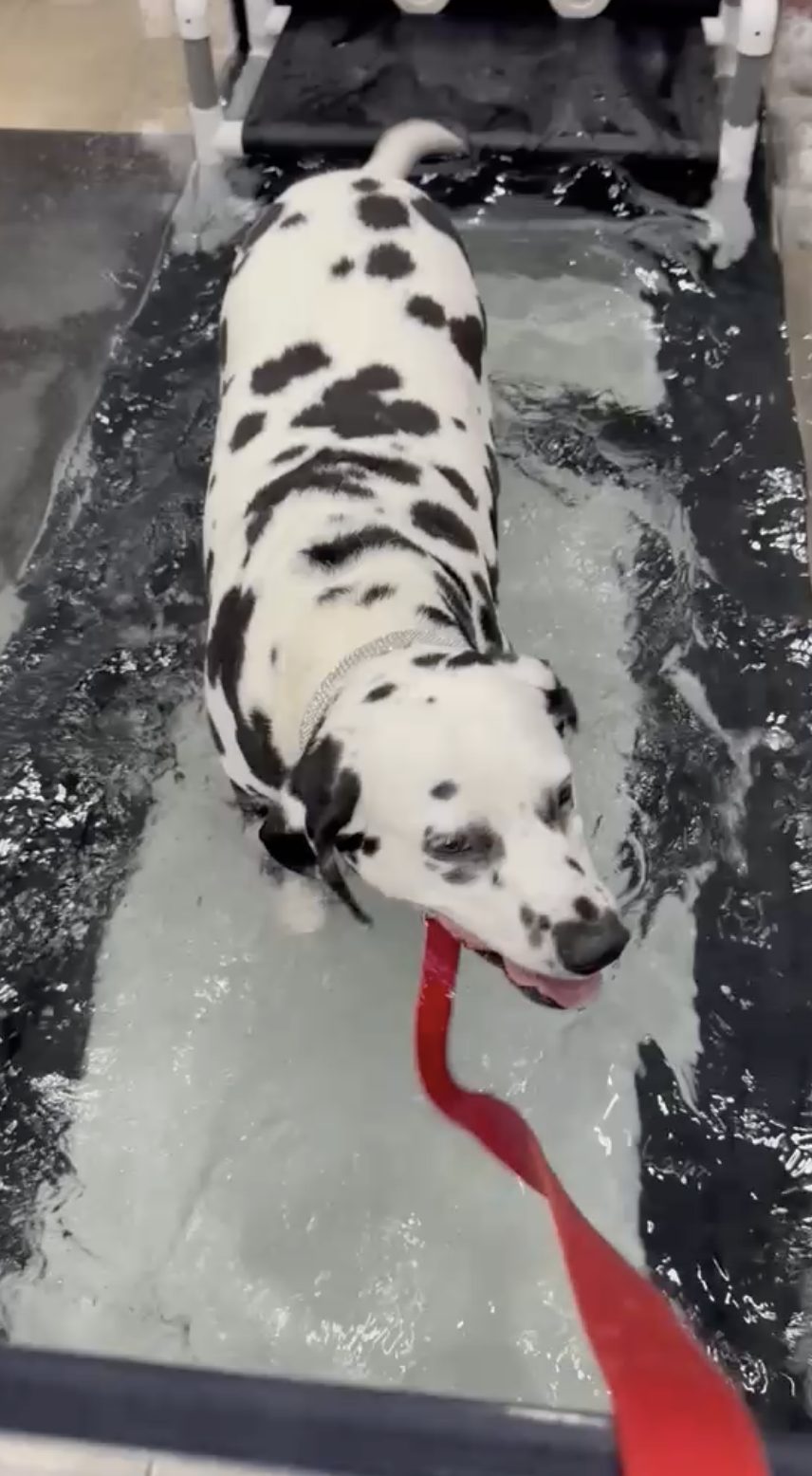
The water treadmill breaks that cycle. Buoyancy removes most of the load, so a heavy dog can work meaningfully — building cardiovascular fitness and burning energy — without the joint punishment that land exercise delivers. Combined with a proper feeding plan, it is one of the most effective weight-loss tools we have, and weight loss is itself among the single best interventions for an arthritic dog.
Neurological recovery and mobility
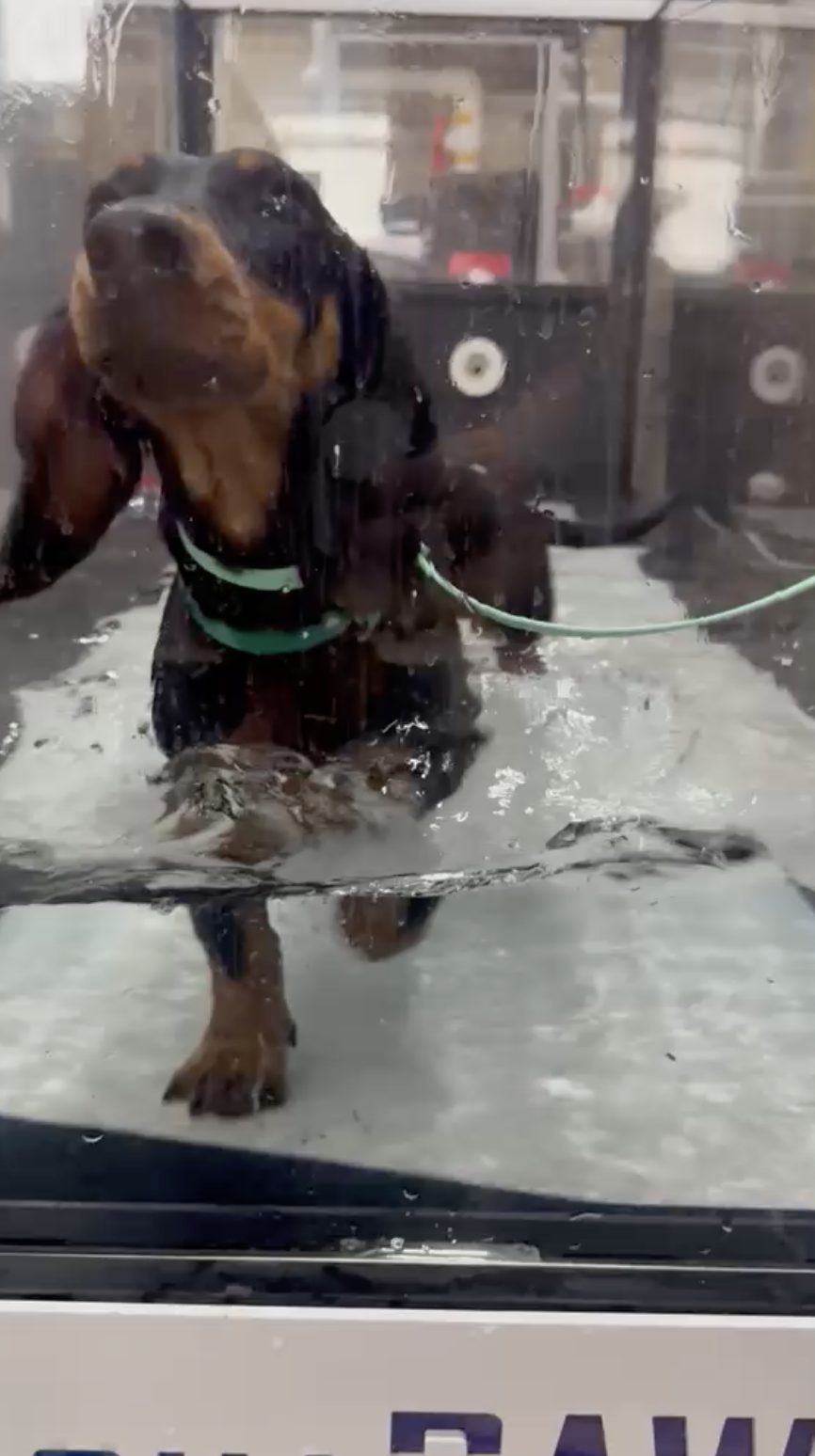
Dogs recovering from intervertebral disc disease, spinal surgery, or other neurological conditions often need to relearn coordinated movement, not simply rebuild strength. The support of water allows a dog with poor limb control to attempt stepping safely, with far less risk of a fall than on a hard floor.
For these patients the value is as much in repetition and confidence as in muscle. Many dogs who are reluctant to use a limb at all will use it in water, and that first willing step is often the turning point.
Conditioning for sporting and working dogs
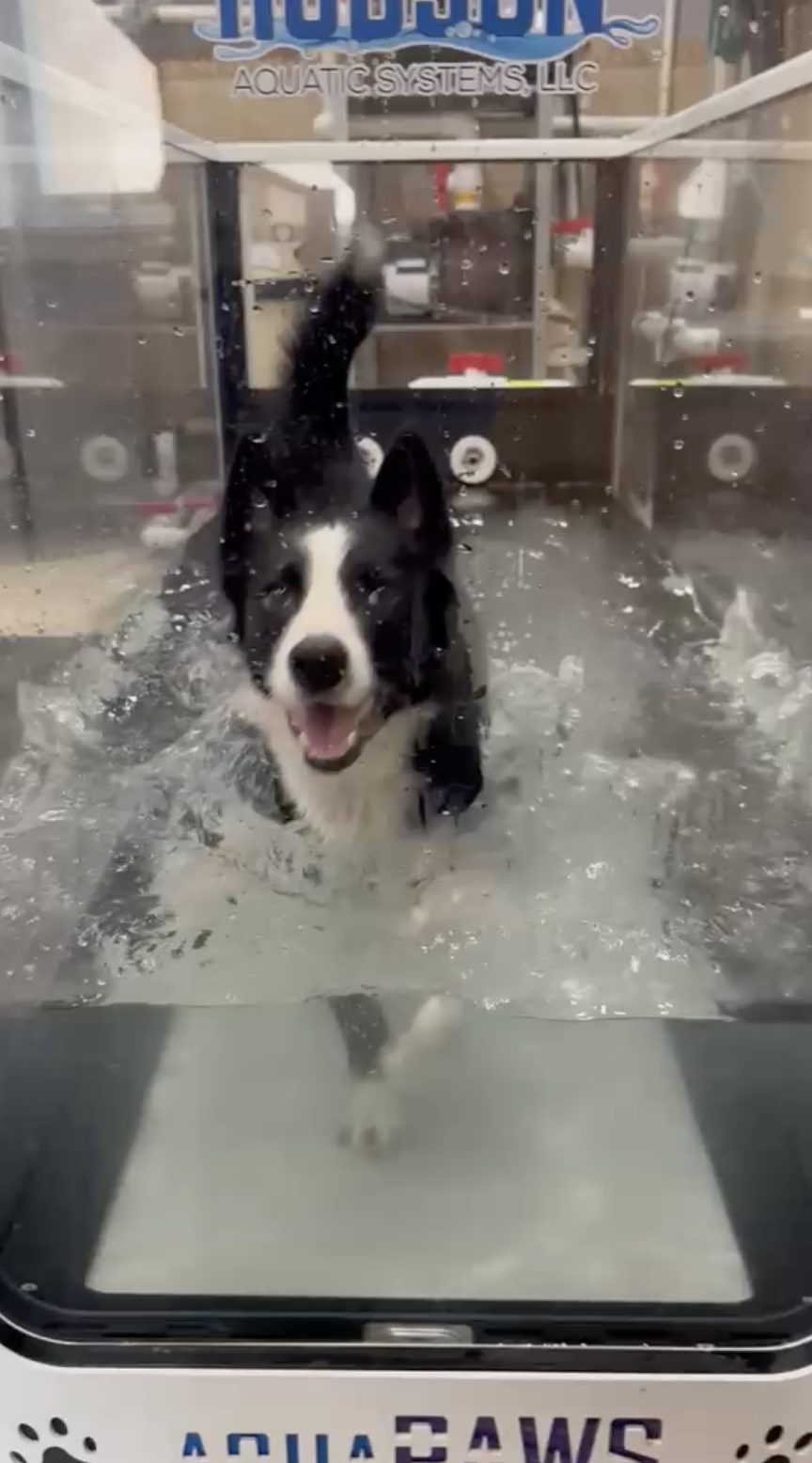
Not every patient in our treadmill is injured. Agility, dock diving, field, and conformation dogs use hydrotherapy for low-impact conditioning that builds strength and stamina without the repetitive concussion of hard-surface work.
For handlers managing a competition season, it is a way to keep a dog fit through a rest period, or to bring one back gradually after time off.
What a course of therapy looks like
We start with an assessment: how your dog moves, where the restriction is, and what the surgeon, examination, or radiographs tell us. From there we build a plan with a realistic number of sessions, clear goals, and exercises to do at home between visits — the home work matters as much as the sessions.
Most post-surgical patients attend once or twice weekly over several weeks. Arthritis and weight-management patients often settle into a longer, lower-frequency rhythm. We will be honest about the likely outcome, including when a dog has reached the limit of what rehabilitation can offer. Recommending sessions that will not help is not a service to anyone.
More photos
Common questions
Where can I find water treadmill therapy for dogs near Buffalo, NY?
Pathways Animal Hospital offers canine underwater treadmill therapy and hydrotherapy in Williamsville, New York, serving dog owners across Western New York. Sessions are used for post-surgical rehabilitation, arthritis and joint therapy, weight management, neurological recovery, and conditioning. Call 716.936.8387 to arrange an assessment.
What is an underwater treadmill for dogs?
It is a treadmill enclosed in a chamber that fills with warm water. Buoyancy supports much of the dog’s body weight so painful joints can move comfortably, while water resistance strengthens muscle. Water depth, speed, and session length are adjusted individually, making it a controlled way to rebuild strength after surgery or manage arthritis.
Does my dog need to know how to swim?
No. On the water treadmill dogs walk on a solid surface with their feet down and their head well above water, which most find far less intimidating than swimming. Therapeutic swimming is offered separately, and dogs new to water are introduced gradually with support and never forced.
Can hydrotherapy help my dog lose weight?
Yes, and it is often the most practical option for a dog who is both overweight and sore. Buoyancy removes most of the load from the joints, so a heavy dog can exercise meaningfully and build cardiovascular fitness without the joint strain of walking further on hard ground. Combined with a structured feeding plan, it is an effective part of a weight-loss program.
Does the water treadmill help dogs with arthritis?
Often significantly. Warm water eases stiffness and buoyancy reduces load on painful joints, allowing movement that is difficult on land. Research on dogs with hip osteoarthritis has shown improvement in lameness and muscle mass over an eight-week underwater treadmill program compared with anti-inflammatory medication alone.
When can rehabilitation start after surgery?
Timing depends on the procedure and the surgeon’s guidance. Gentle range-of-motion work often begins within days, while underwater treadmill work usually waits until the incision has healed, commonly around two weeks. Starting at the right point matters — too early risks the repair, too late allows muscle loss that is slow to recover.
How many sessions will my dog need?
It varies with the condition and the goal. Post-surgical rehabilitation commonly runs over several weeks with sessions once or twice weekly, while arthritis and weight-management patients often continue at a lower frequency. We set out an expected number of sessions and clear goals at the initial assessment rather than leaving it open-ended.
Can hydrotherapy help a dog with a spinal injury or IVDD?
It is frequently used for neurological patients, including dogs recovering from intervertebral disc disease or spinal surgery. Water supports a dog with poor limb control so they can attempt stepping safely with far less risk of falling, which helps rebuild coordination and confidence as well as muscle.
References & further reading
The guidance on this page follows current veterinary consensus. These are the sources behind it, if you would like to read further.