
Not every swim has to be therapy. Open swim is time in the pool for the fun of it — low-impact exercise for dogs who love water, useful for burning energy in a dog whose joints do not tolerate a long run, and a genuinely good time for most of them.
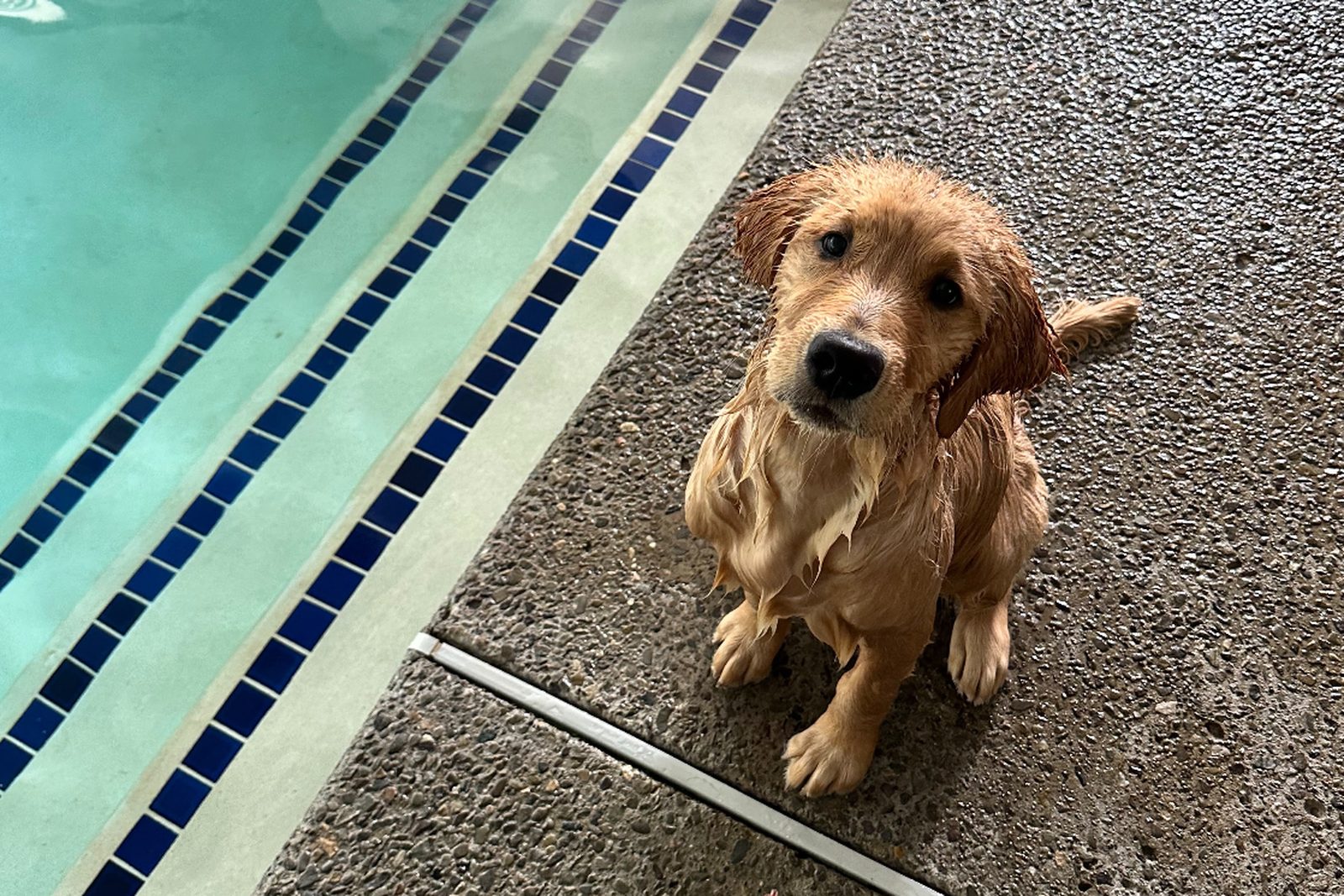
Everyone starts with an introduction session
Before your dog can join open swim, you and your dog attend a 30-minute introduction session. We go through the rules and how the pool works, and you sign the release and rules acknowledgement beforehand so the appointment itself is spent getting your dog comfortable in the water rather than filling in forms.
It is not a formality. A dog who has never swum, or who panics at the edge, has a much better first experience with someone alongside them who does this every day.
Health requirements before swimming
These protect every dog using the pool, not just yours. All dogs must be current on vaccines, on flea, tick and intestinal parasite prevention, and must have had an annual examination with a veterinarian within the last twelve months.
Dogs cannot swim with an open wound, or with diarrhea, vomiting, or any other sign of illness. If your dog is unwell on the day, call and move the session — we will not charge you for being sensible about it.
- Current on vaccines
- Current on flea, tick and intestinal parasite prevention
- Annual veterinary examination within the last 12 months
- No open wounds
- No diarrhea, vomiting, or other signs of illness
Is swimming right for your dog?
For most dogs it is excellent exercise — water carries their weight, so they work hard without loading their joints, which suits overweight dogs, older dogs, and high-energy dogs recovering from an injury that rules out running.
It does not suit every dog, and that is fine. Brachycephalic breeds tire and overheat faster in water, and some dogs simply do not enjoy it. We will tell you honestly after the introduction session if we think your dog is not having a good time.
Common questions
Does my dog need an introduction session before open swim?
Yes. Every dog begins with a 30-minute introduction session covering the pool rules and getting them comfortable in the water. Release and rules acknowledgement forms need signing before that appointment so the session itself can be spent on the dog.
What are the health requirements for swimming?
Dogs must be current on vaccines and on flea, tick and intestinal parasite prevention, and must have had an annual veterinary examination within the last twelve months. Dogs with open wounds, diarrhea, vomiting or any other sign of illness cannot swim, for the protection of every dog using the pool.
Is recreational swim the same as hydrotherapy?
No. Recreational swim is exercise and enrichment. Hydrotherapy and underwater treadmill work are clinical rehabilitation with a treatment plan, used after surgery or for arthritis and neurological recovery. The two use the same facility for different purposes.
My dog has never swum before. Is that a problem?
Not at all — that is precisely what the introduction session is for. Dogs new to water are introduced gradually and with support, and never forced. Some take to it immediately, some need a few sessions, and a few decide it is not for them, which we will tell you honestly.
References & further reading
The guidance on this page follows current veterinary consensus. These are the sources behind it, if you would like to read further.