
Therapeutic laser is a quiet, drug-free addition to a pain plan. It is painless, takes minutes, and most pets settle and enjoy it — which makes it genuinely useful for animals who cannot tolerate some medications, or who need a little more comfort than medication alone provides.
What it does
Therapeutic laser, sometimes called photobiomodulation, uses specific wavelengths of light to stimulate activity in tissue. In practice it is used to reduce inflammation and pain and to support healing — most often for arthritis, post-surgical recovery, wounds, and soft tissue injury.
It is an addition to a pain plan rather than a replacement for one. We will be straightforward about that: laser complements medication, weight management, and rehabilitation, and works best as part of a package rather than on its own.
What a session is like
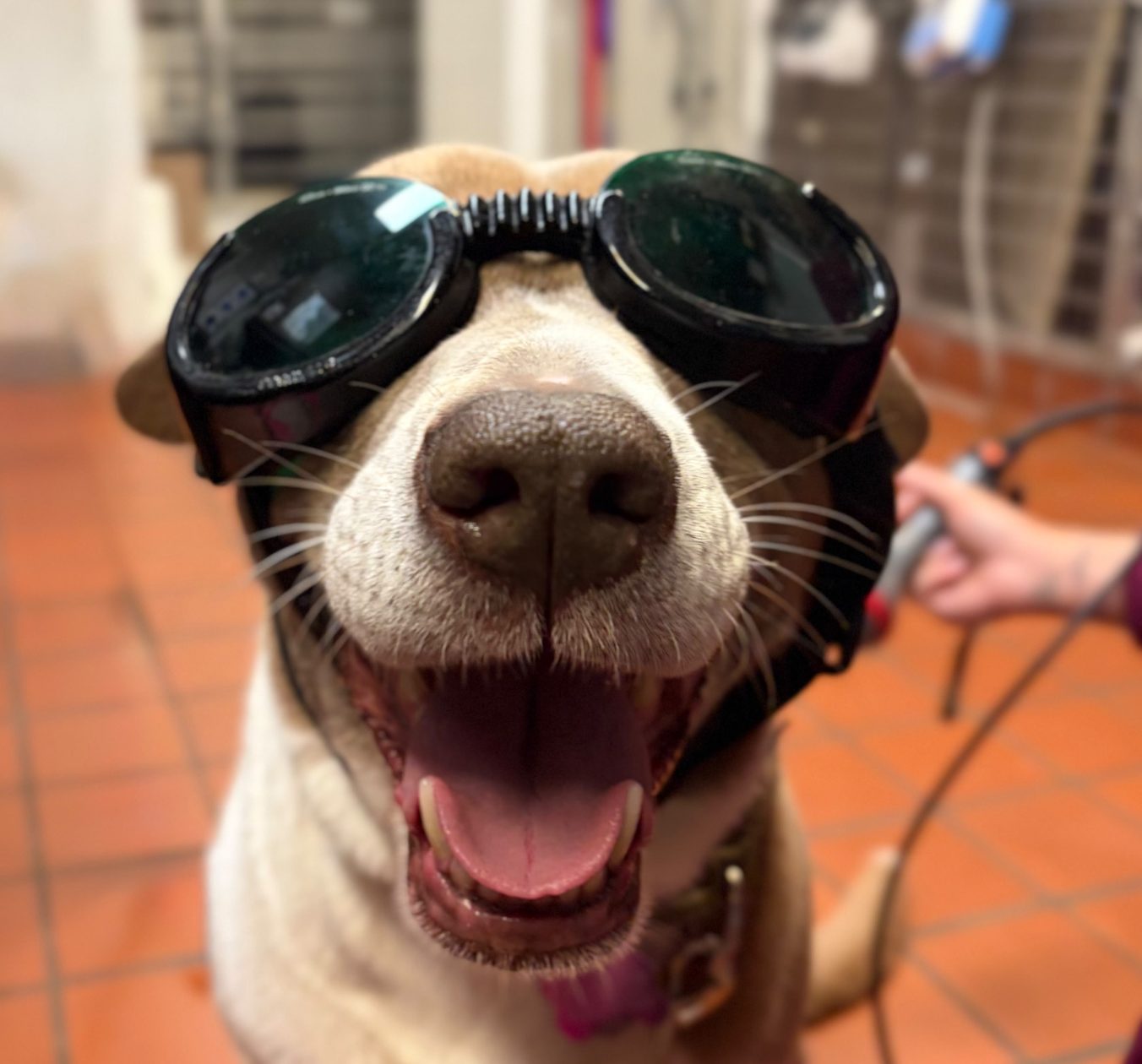
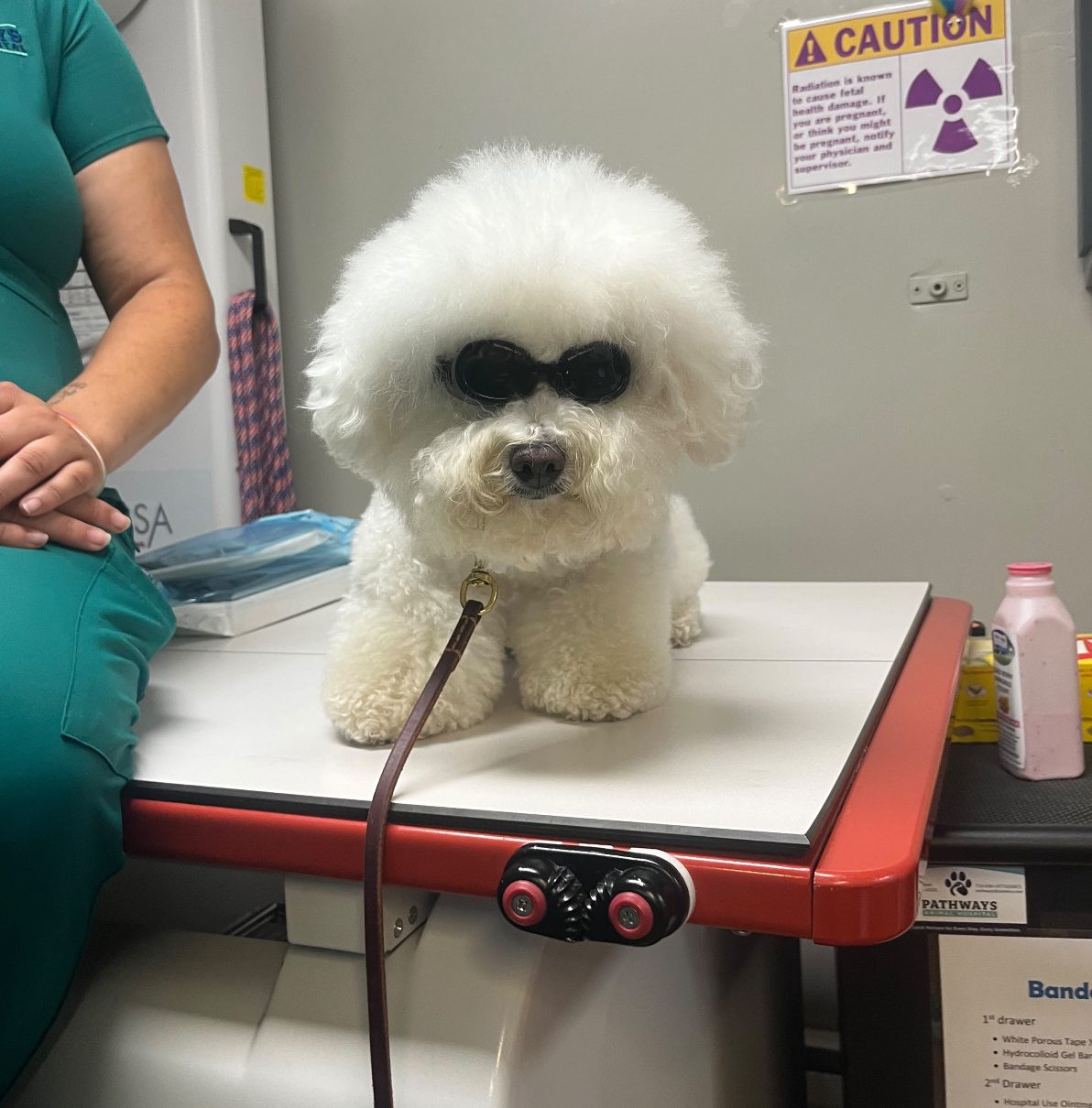
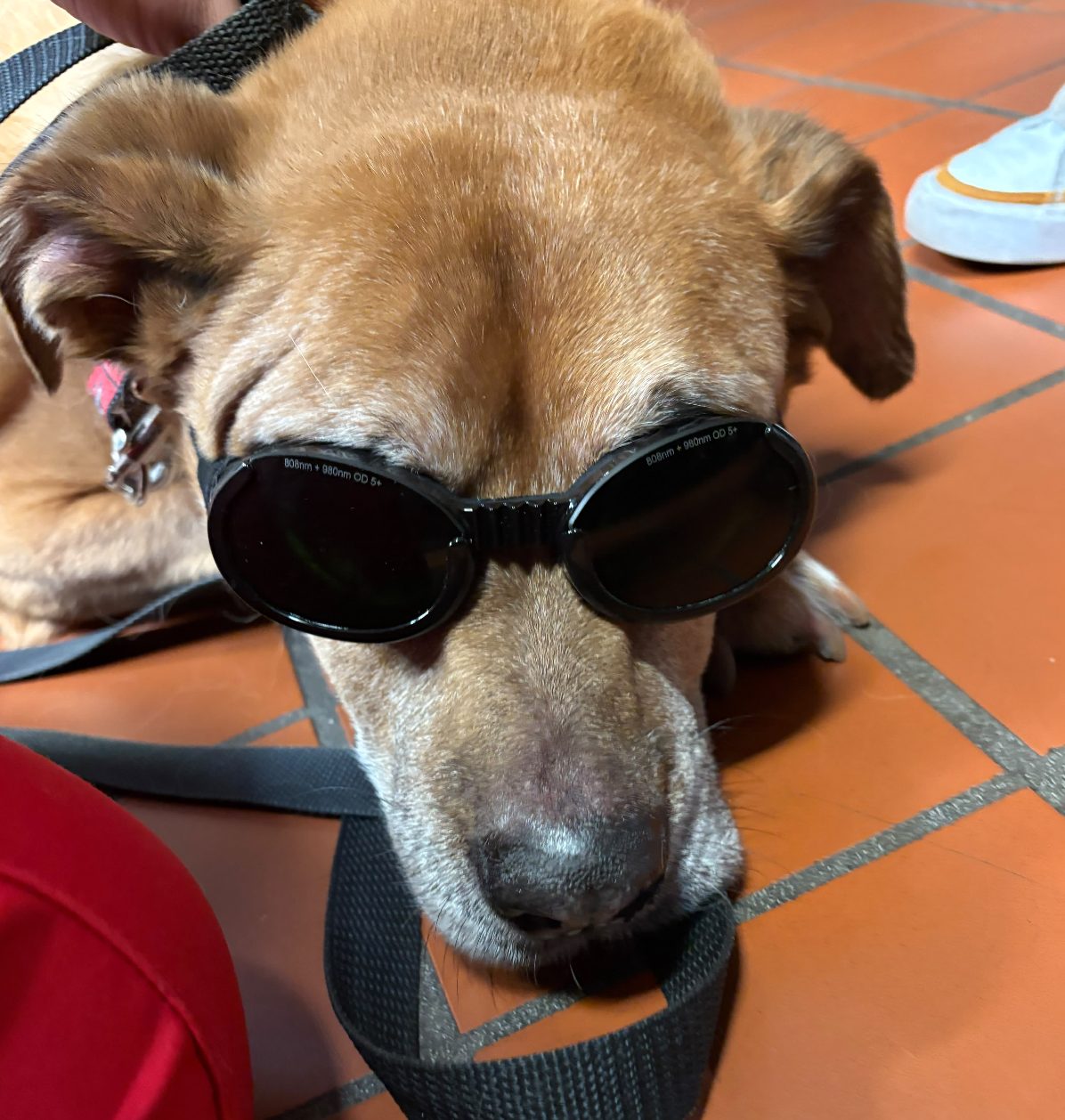
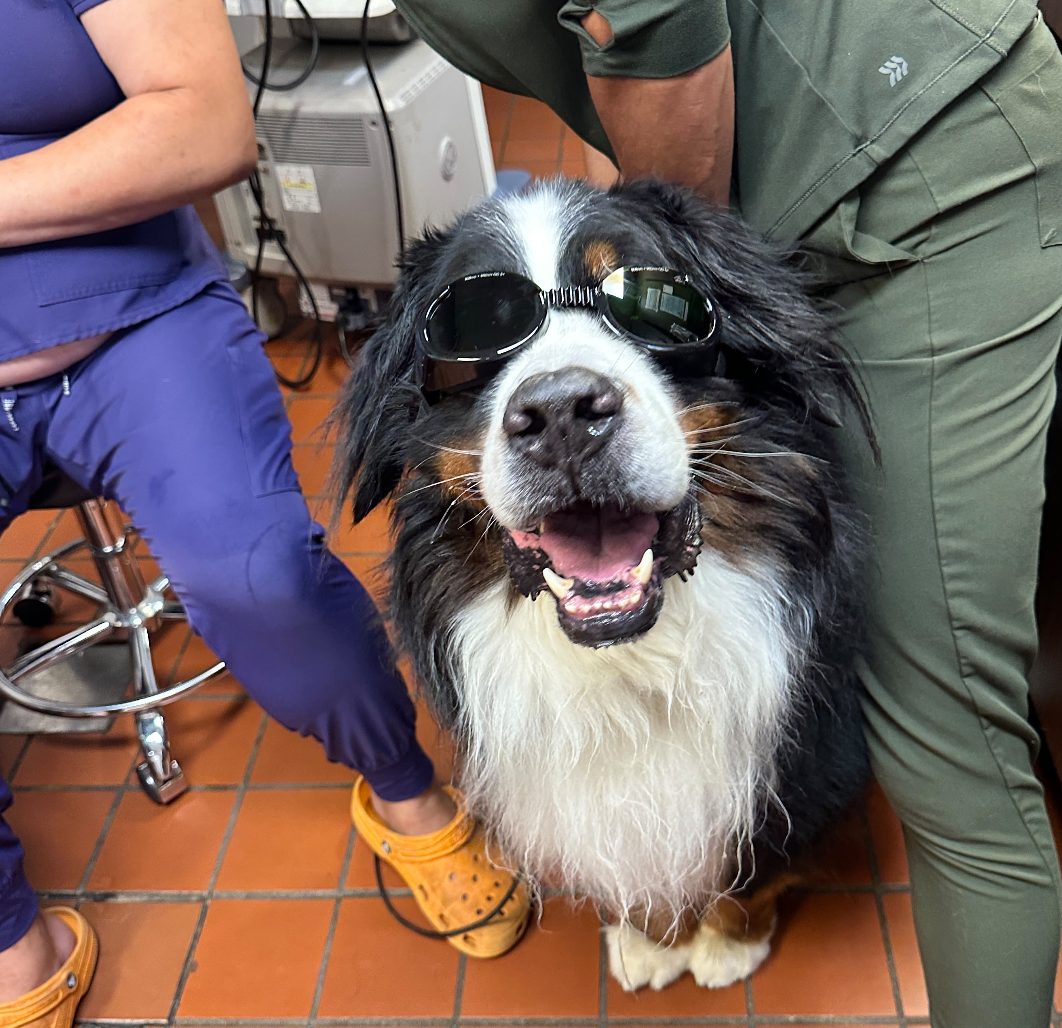
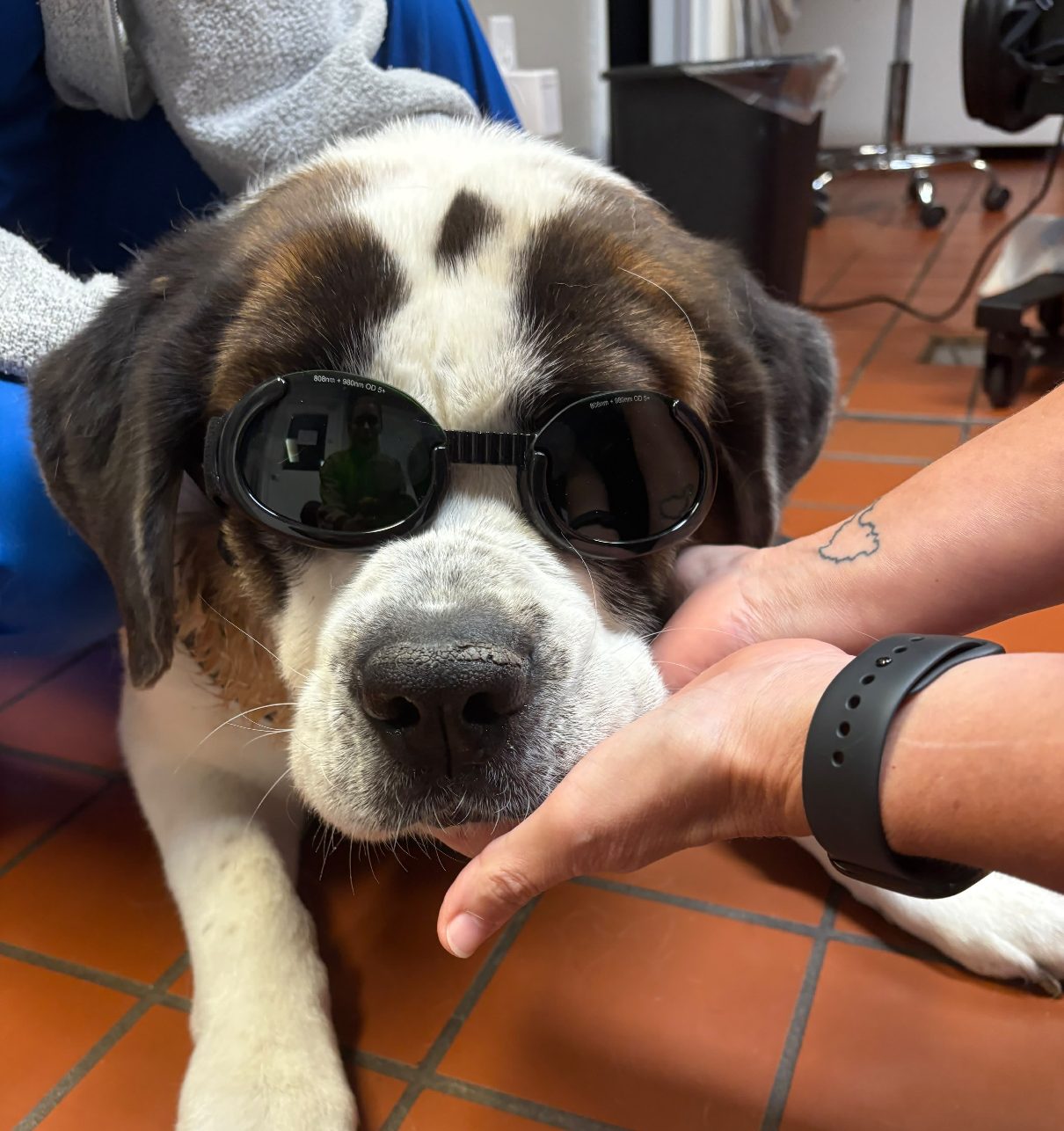
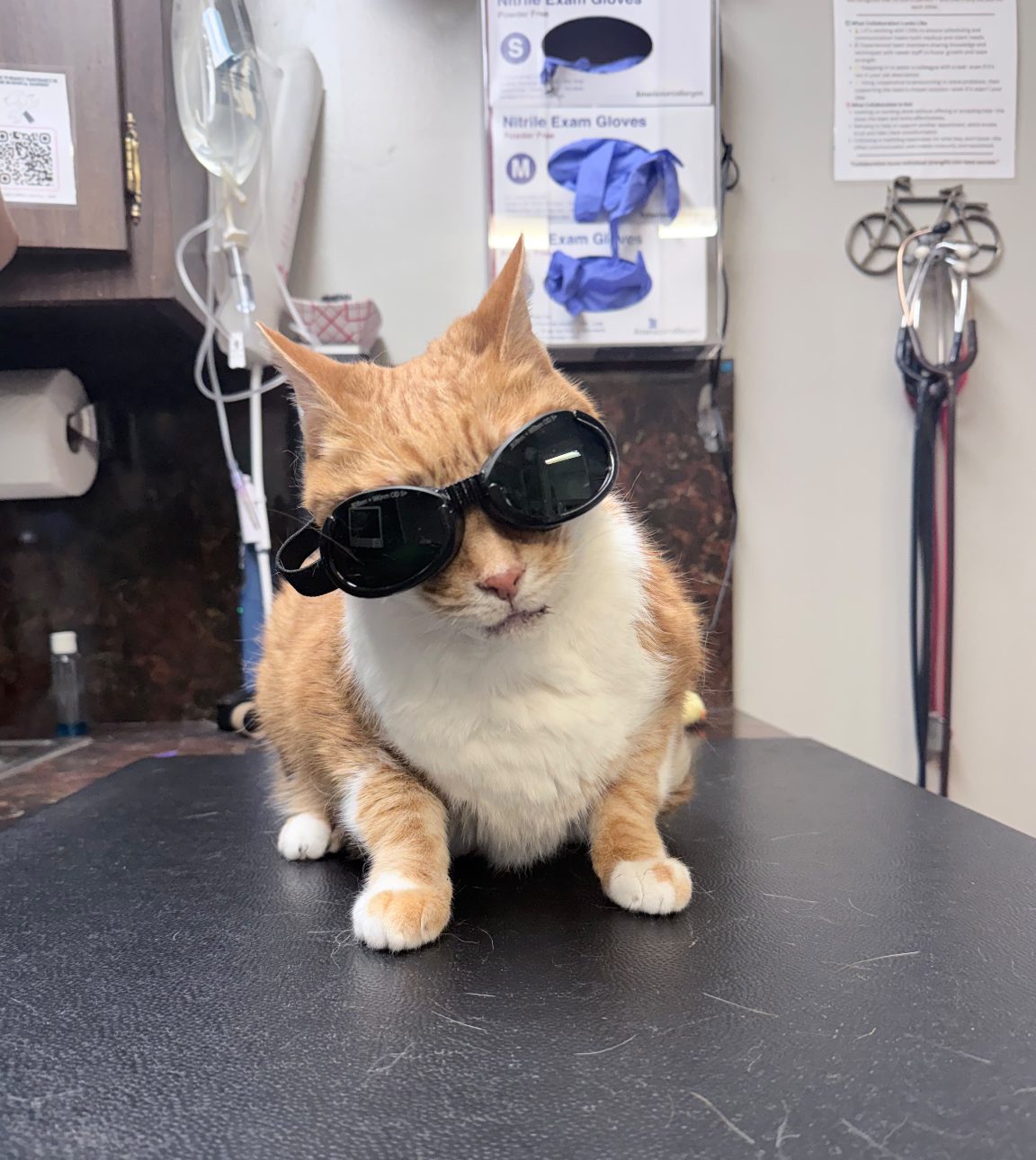
No sedation, no clipping, no discomfort. A handheld device is moved over the treatment area for several minutes while your pet lies still — many doze off. Everyone in the room wears protective eyewear, including your pet.
Response usually builds over a course of treatments rather than appearing after one, with sessions more frequent at first and then tapering to maintenance.
Because there is no recovery period and nothing to go home with, laser fits easily alongside a normal day. Most pets walk out exactly as they walked in, and appointments are short enough to slot around work.
Where it fits in a pain plan
Chronic pain in dogs and cats is rarely solved by one thing. The plans that work tend to combine several: keeping weight down, which is the single most effective intervention available for an arthritic joint; appropriate medication; controlled exercise or rehabilitation to maintain the muscle supporting the joint; and adjustments at home such as rugs on slippery floors, ramps, and raised bowls.
Laser is one useful component of that picture. It is particularly valuable for patients who cannot take anti-inflammatories — those with kidney or liver disease, for instance — where the usual options are narrower.
What it is not is a substitute for a diagnosis. If your pet is sore, the first job is understanding why, and that may mean radiographs or bloodwork before any treatment begins. Treating pain without knowing its cause is how the real problem gets missed.
Honest expectations
Some patients respond noticeably and some do not respond at all, and it is not always possible to predict which in advance. We will agree a short trial course and a clear point at which we assess whether it is making a difference for your pet.
If it is not helping, we will say so and stop. Recommending sessions that are not working is not a service to you or your pet.
More photos
Common questions
Does laser therapy hurt?
No. Most pets feel nothing beyond gentle warmth, and many relax or fall asleep during treatment. No sedation or clipping is required, and sessions typically last only a few minutes.
What conditions does laser therapy help with?
It is most commonly used for osteoarthritis, post-surgical recovery, wound healing, and soft tissue injuries. It is used as part of a broader pain management plan alongside medication, weight control, and rehabilitation rather than as a standalone treatment.
How many laser sessions will my pet need?
Chronic conditions such as arthritis usually begin with more frequent sessions over the first few weeks, then taper to a maintenance schedule. Acute injuries and post-surgical cases often need a shorter course. We set expectations at the outset rather than leaving it open-ended.
References & further reading
The guidance on this page follows current veterinary consensus. These are the sources behind it, if you would like to read further.
- Osteoarthritis management guidelines — AAHA
- Pain management in animals — Merck Veterinary Manual